Rob Ryan
In the WoodsRob Ryan is both a detective and the surviving child of an unsolved disappearance: in 1984, he entered Knocknaree wood with Jamie Rowan and Peter Savage, but only he came back. He has no memory of what happened there. As an adult, he builds a career and a new identity around that blank, keeping his childhood history from colleagues even when a later investigation makes the concealment consequential. His past is not a mystery he can solve from recollection; it is a set of physical clues, other people’s accounts, and fears he cannot verify.
Identity and Background
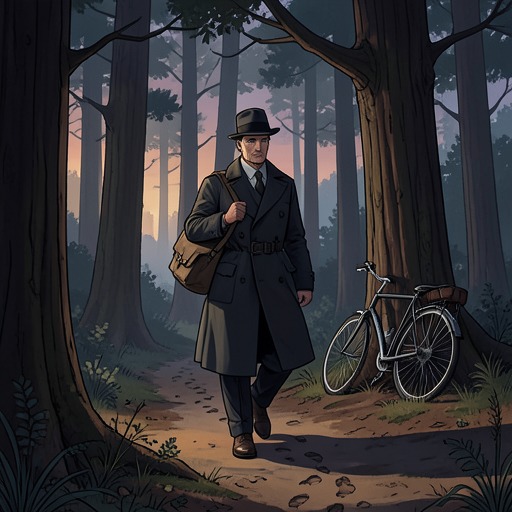
On Tuesday, 14 August 1984, Rob—then known as Adam Ryan—was twelve and living in Knocknaree, County Dublin. He and the two other children, Jamie Rowan and Peter Savage, spent the afternoon around their homes, where residents saw them on bicycles, along a wall, and on a tire swing. At about three o’clock, they left their bicycles in Peter’s garden and told Peter’s mother they were going to play in the adjoining wood. The children knew that part of it well. Peter was told to be home for tea at half past six, and the ordinary confidence of the arrangement makes the disappearance all the more stark: no one initially had reason to expect the children would not return.
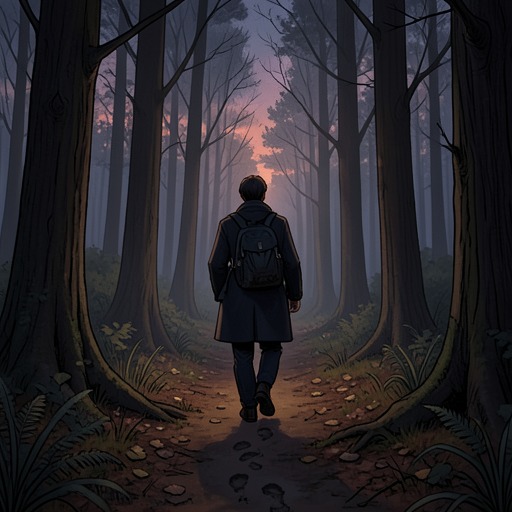
When Peter had not come home by 6:45, his mother checked with the other families. None of the children had returned. A search began, and at 10:20 p.m. a policeman found Rob in dense woodland near the center of the wood, standing against an oak. Searchers had called without getting a response. The dogs tracked the missing children to a point not far from him, then lost the scent. Peter and Jamie were never found in the evidence covered here; Rob’s return offered no explanation for their absence.
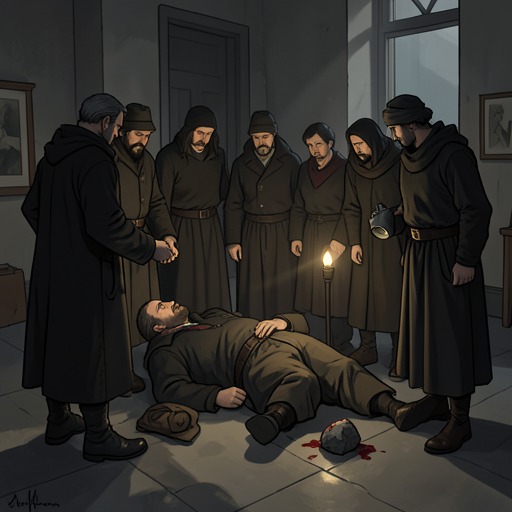
The surviving physical evidence did not resolve what had happened. Rob’s running shoes were heavily bloodstained, and the pattern indicated that the blood had entered them from the inside before being transferred to his socks. The back of his T-shirt had four parallel tears. His own blood type was A positive, as was Jamie Rowan’s; Peter Savage was ruled out as the source because both his parents were type O. Since DNA analysis was not available in Ireland in 1984, investigators could not establish whose blood it was, and they could not rule out either a fourth person or more than one source. The details made Rob’s return a source of evidence, but not an answer.
The Missing Summer and Its Aftermath
Rob was physically uninjured apart from minor scratches and abrasions, yet for almost thirty-six hours he made no voluntary movement, and he did not speak for another two weeks. When he could speak, he remembered nothing from leaving home that afternoon until being examined in hospital. The loss was not a recollection he could gradually retrieve through questioning: police returned to interview him over the following years, first at intervals during school holidays and later about once a year, but he had nothing to tell them. Their repeated attempts became frightening through association with his blankness and with the strange, distant images he experienced during the first weeks after the disappearance. The interviews eventually stopped around the time he left school.
The disappearance also fixed itself in Rob’s mind through the children’s last ordinary conversation. In his recollection, he did not want to go and find Jamie Rowan after learning that she was to leave for boarding school in two weeks. At Peter’s house he wished he could stay with Peter’s baby brother and wait for Peter to come back and explain the news. When Jamie revealed that her mother had already paid the fees, the children understood that the separation they had hoped to prevent was imminent. Rob remembers the revelation as a betrayal by an adult they had trusted, and the shock of it as the collapse of their belief that the summer would simply continue. The memory gives emotional shape to their final known hours, but it does not explain what followed in the wood.
At boarding school, Rob stopped using Adam and took his middle name, becoming Rob Ryan. He does not know whether the change was his idea or his parents’. The childhood case had attracted overwhelming publicity, and he believed that keeping the less common name Adam would have made him easier to identify. He remembers furtively reading newspaper coverage and concealing what he had read; later, he considered the new name a practical barrier between the well-known missing-child case and the detective with an English accent. The change protected his privacy without changing the underlying fact that he had been the sole child found.
A more private fear attached itself to the same absence. At boarding school Rob ate very little during his first year, sometimes hiding food rather than eating it. He later wondered whether he had treated fasting as an appeal that might bring Peter and Jamie back and restore the old life. More painfully, he asked himself whether he had been left behind because he was heavy, awkward, unable to run fast enough, or afraid to jump from a wall. These are his suspicions, not established explanations for the disappearance. Their force lies in the question he cannot settle: whether survival meant being spared or rejected.
Detective Work and Concealment
Rob did not become a detective in pursuit of the childhood case. He read the file once, on his first day as a detective, and did not return to it. What drew him to police work was its specialized language and its procedural craft: the small forensic distinctions, the rhythms of interviews, and the strategic decisions by which detectives tested a suspect’s self-preservation. He watched Murder squad detectives work before joining their world, admiring their skill while recognizing that carefully applied pressure could be a refined form of cruelty. His professional fascination therefore sits beside, rather than replaces, his refusal to revisit the case that made him a witness.
He told very few people about Knocknaree. His parents and Cassie Maddox knew, as did a small number of people from his earlier life, but he did not make the history part of his working identity. When a new investigation appeared potentially connected to the old disappearance, Rob understood that he should tell O’Kelly. Police rules barred an officer from investigating a case in which he might be emotionally involved, and disclosure could have removed him from the inquiry and brought renewed questioning. Rob convinced himself that withholding the information would not help the case or the community; he also wanted to avoid the scrutiny and distress that disclosure would bring. He had vivid memories of the earlier interviews and regarded the decision to keep silent as reasonable, even though it compromised his duty to be open with his colleagues.
The concealment became especially significant during the questioning of Jonathan Devlin. Rob pressed Jonathan on whether he had been absent from the events under investigation, possibly using a cinema visit as an alibi, and stressed the distinction between being a murderer and being an accessory. Jonathan denied that he and his associates had touched the children. Rob replied that Cathal Mills had identified another man as the ringleader and urged Jonathan to say whether he had been only an accessory or witness. The exchange shows Rob applying the investigative distinctions he values while his own history creates a conflict he has not disclosed: he is questioning a suspect in a case that may touch the childhood disappearance in which he was the only surviving witness.
Exposure and Change
O’Kelly eventually confronted Rob with his identity as Adam Ryan and demanded to know why he had not revealed it. The discovery overturned Rob’s self-image as someone making an independent, if difficult, choice. He recognized instead that his silence could damage the investigation and provide a defense with grounds to challenge his impartiality. Because he was both the lead detective and the only eyewitness and surviving victim of an unsolved related case, the concealment could also make him appear a possible suspect. Rob had never seriously considered that possibility in the two decades since the disappearance. The blood in his shoes, his age at the time, and the uncertainty surrounding his memory suddenly became evidence he could no longer regard solely from the outside.
The disclosure also reached Cassie Maddox through Rosalind Devlin, who identified Rob as the boy whose friends had disappeared in Knocknaree and used his secrecy to suggest that he had not told Cassie everything. Rob watched this revelation in the recording of the interview. Its impact was not simply that his past was now known: the information had become a means by which Rosalind could unsettle Cassie and damage trust between the partners. Rob’s long-maintained separation between private history and professional life could no longer protect either.
Later, Jonathan Devlin asked Rob directly whether Rosalind’s account was true. Rob confirmed that he was Adam Ryan. Jonathan told him that his family had nothing to do with the childhood disappearance, speaking with a gentleness that surprised Rob. The confirmation did not solve the case or restore Rob’s missing memories. It did, however, place his history openly between them, where it could no longer be managed by a changed name or a private decision not to speak.
Narrative Role
Rob’s account makes the reader encounter the disappearance through an adult who can describe its consequences but cannot narrate its central event from memory. The file supplies dates, witness statements, clothing, and forensic uncertainty; his recollections supply fragments of ordinary childhood trust and the later fear that his friends’ absence might have been a choice made about him. Neither source closes the gap. His role as detective intensifies that formal tension: he is trained to interpret evidence and test accounts, yet he cannot turn himself into a reliable witness to his own past.
His silence is therefore both a defense against repeated exposure and a consequential breach of professional trust. The new name helps him live beyond publicity, but it also makes concealment possible; the same blank that leaves him unable to explain the disappearance allows him to postpone confronting what his presence in the investigation means. Rob’s eventual exposure does not deliver recovered certainty. It forces him to recognize the risks of what he withheld, while leaving the defining questions—what happened to Peter Savage and Jamie Rowan, and why Rob returned alone—unanswered.